One of the last surviving pieces of the tramway rails that were laid in Damascus in 1907. It was the year when electricity was first introduced into the city by a Belgian-Turkish company and the tramway (pronounced in Damascus as tram-why) began to compete with carts as the main method of transportation. By 1931, the tramway had a network of 6 lines: Al-Midan, Al-Jisr Al-Abyad, Sheikh Muheddine, Muhajireen, Kassa' and Douma. The picture shows where the tramway used to turn right, after an exhausting day of carrying hundreds of people, to be parked inside the complex of the Electricity Company in Al-Mutanabbi Street. The last tramway to make this journey ran on these rails in 1961.
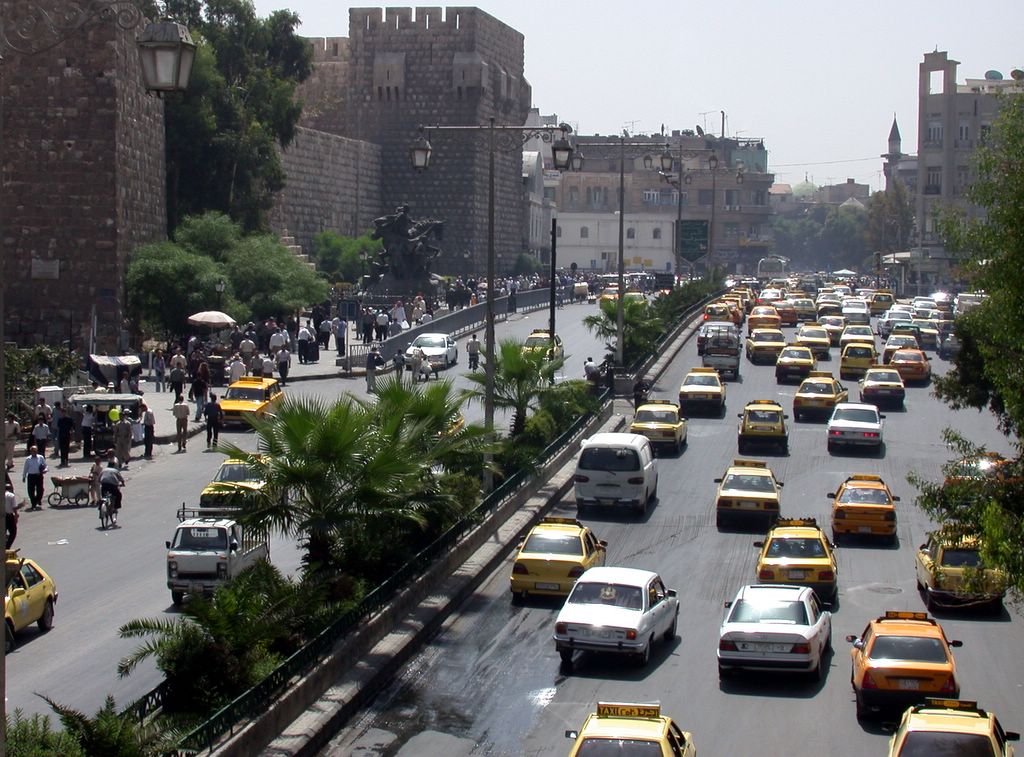
With the substitute now being the air-polluting, chaos-producing, uncomfortable micro-buses, many people in Damascus yearn for the tramway days and tell their children (or grandchildren) nostalgic stories about the jabee or commissiari and his wooden ticket box, the 7.5 eresh (Piastre = 1/100 Syrian Pound) they used to pay for the first class ride and the 5 they used to pay for the second class one.