3/21/2005

Mother's Day


It's a bouquet of flowers and kel seneh wintee salmeh, Mama. "May every year bring you good health, mother" before planting a kiss on her hand and gently touching it to the forehead, as a sign of respect and gratitude. It's resting for moments in her warm embrace and feeling this familiar sweet scent. It's listening to Fayzeh Ahmad's "Sitt Al-Habayeb" (the beloved of all beloved) being repeated on radio all day long, and choking with tears when Fairouz sings:

My mother, my angel,
My everlasting love...
Your arms are still my swing,
And I am still a child.

3/18/2005

Stone By Stone


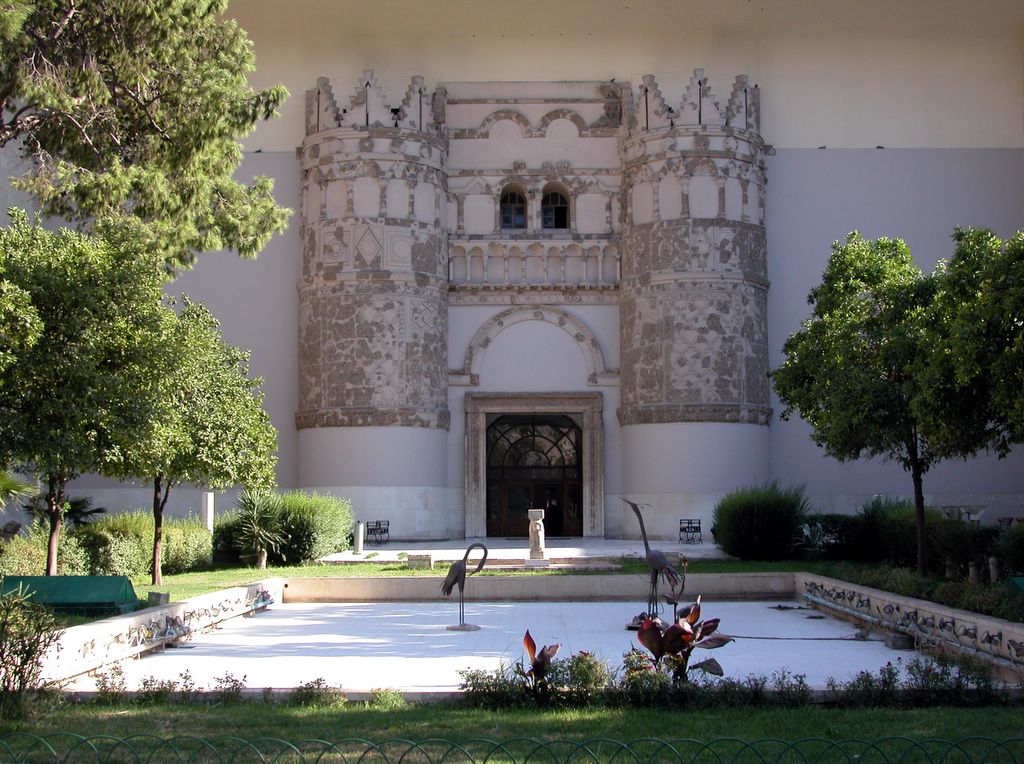
The facade of Al-Hayr Al-Gharbi Palace is one of the most impressive features of the National Museum of Damascus. The palace originally stood 60 km southwest of the ancient city of Palmyra, in the heart of the Syrian desert. It was built by the Omayyad Caliph Hisham Ibn Abdel-Malik in 728 at the crossroads of trade routes connecting Damascus, Baghdad and Arabia. In 1939, the Palace's facade was brought to Damascus and reconstructed, stone by stone, at the entrance of the National Museum. It is one of the rare examples of Persian and Byzantine influences on early Omayyad architecture.

3/16/2005

Beit Baroudi

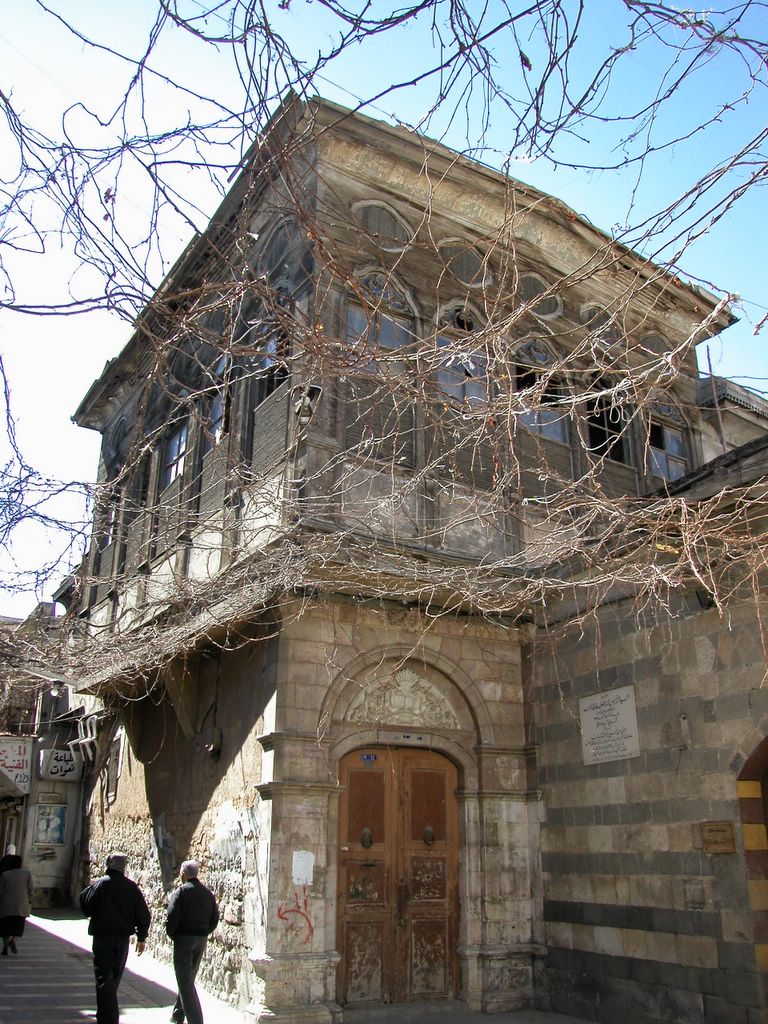
This is where Fakhri Al-Baroudi lived. His house, which is one of the most beautiful in Al-Qanawat neighborhood, is currently being renovated by students of the Damascus University Faculty of Architecture. Al-Baroudi (1887-1966), as well as being a journalist, a politician and an army officer, was known in Syria as the "leader of youth" because he supported and sponsored many youth groups, including boy scouts and several musical bands. He is the author of the famous patriotic song "Bilad Al-'Ourb Awatani" (The Land of Arabs is My Homeland). Today, unfortunately, the words he wrote sound more like a bad joke:

The land of Arabs is my homeland
From Damascus to Baghdad
And from Najd to Yemen
To Egypt and Tatwan*

For no border separates us
And no religion divides us.
Our mother tongue unites us
With Ghassan and Adnan**

* Tatwan is a city in Morocco. ** Ghassan and Adnan are names of ancient Arab tribes. Click here to download the song and here to read the lyrics in Arabic.

3/14/2005

Festival of Colors


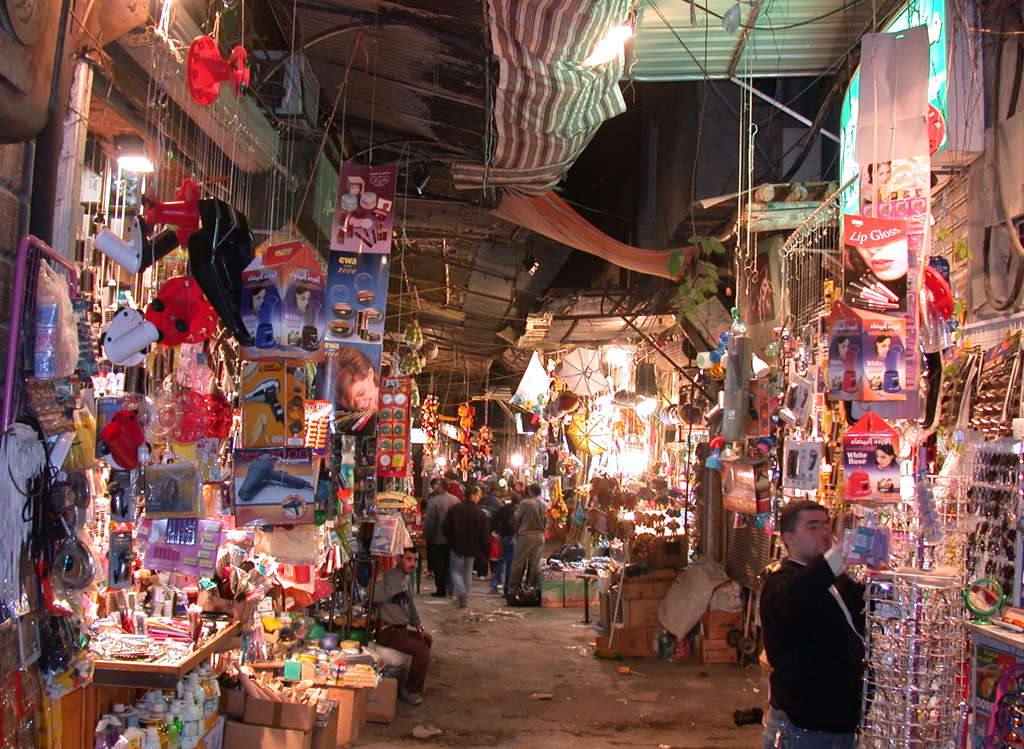
Chinese toys, Syrian-made lipstick, cheap sunglasses, hairdryers, umbrellas, brooms and pens, all make a beautiful festival of colors in a small alleyway near Bab Al-Jabieh.

3/11/2005

Side By Side

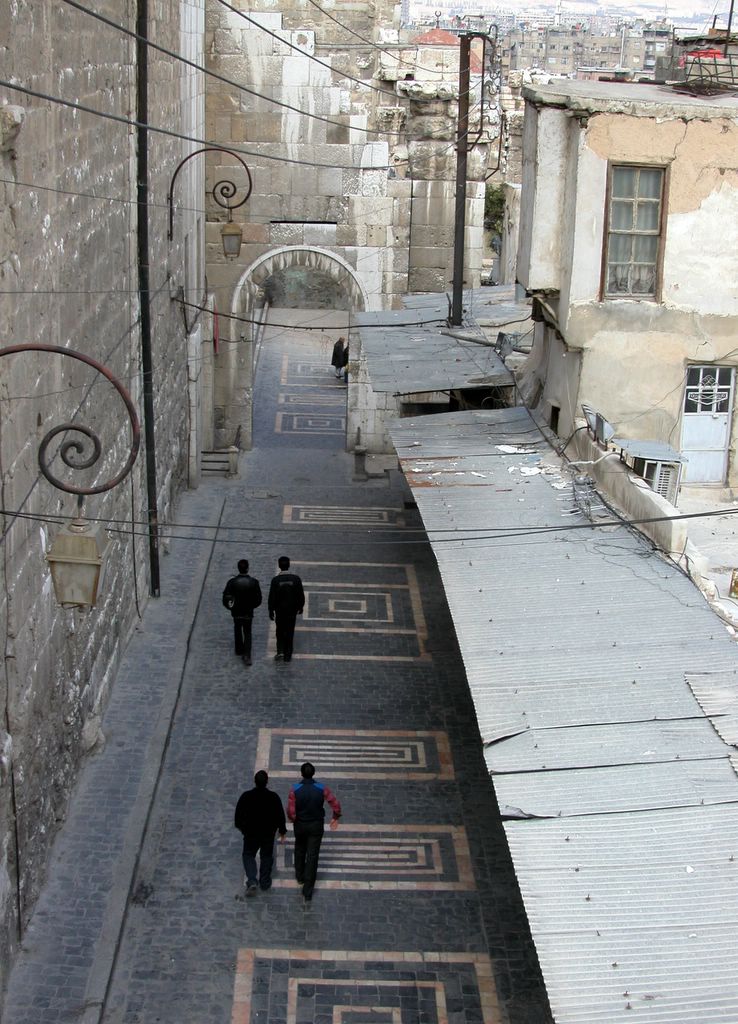
Walking along the Eastern Wall of the Umayyad Mosque before the Friday Prayer.

The Umayyad Mosque stands on a site that has been previously occupied by an Aramaean temple of Hadad, a Roman Temple of Jupiter and finally a church dedicated to St. John the Baptist. When Muslim armies entered Damascus, they established a mosque in the east side of the temple, leaving the Church intact. For more than seventy years, Muslims and Christians prayed side by side inside the walls of the Temple. They used the same main gate as an entrance; Muslims prayed on the east side and Christians prayed on the west side. In 705, the Caliph of Damascus, now the capital of the world's largest empire, wanted to build a huge new mosque and asked Christian leaders to cede their share of the land to him. After long negotiations, the Christians accepted the Caliph's offer to compensate them with four new churches; among them is the famous Mariamiyyah Church (Church of Mary) in Bab Sharqi.

3/09/2005

Rally Day


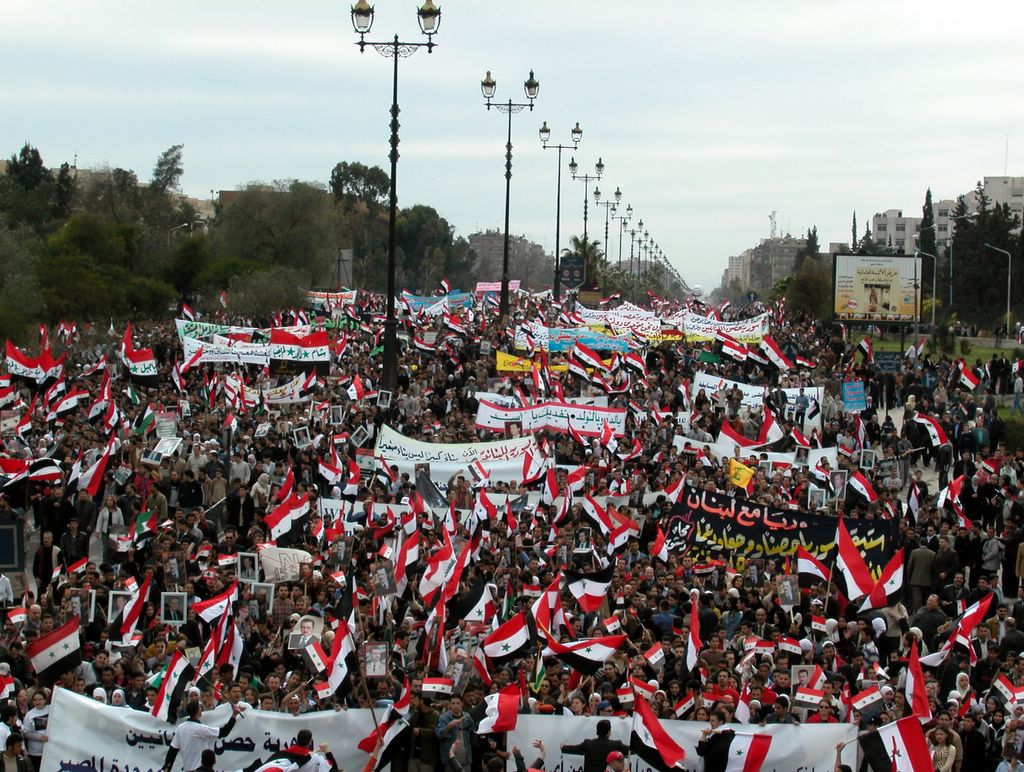
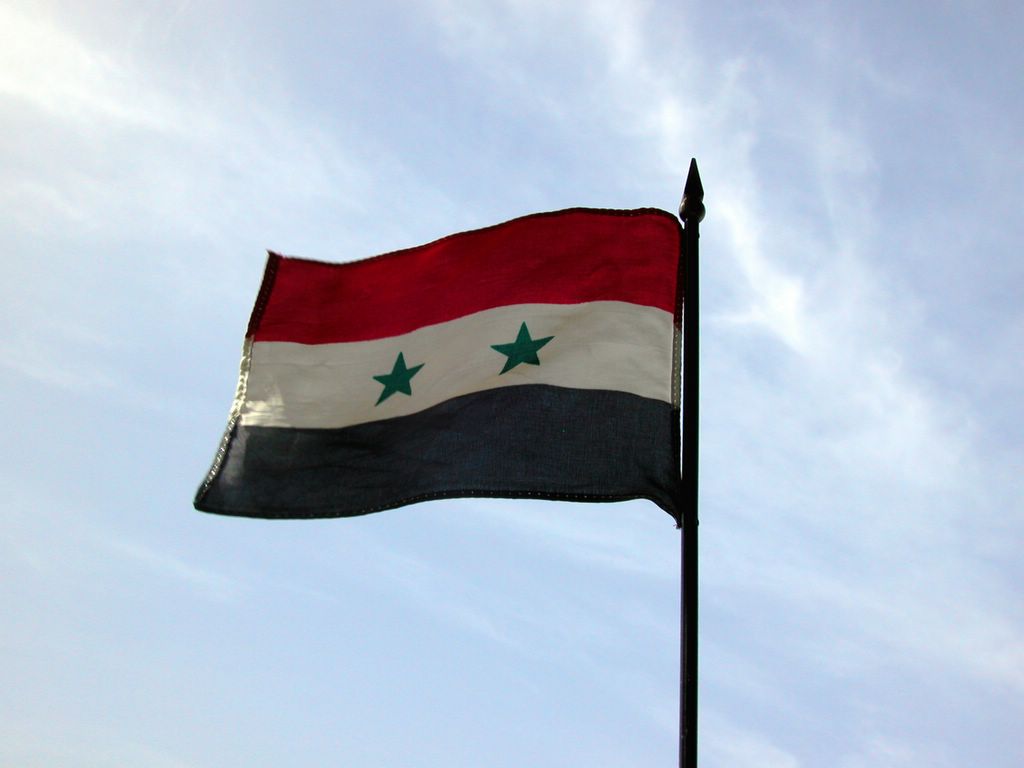
Tens of thousands today crowded al-Mazzeh and 'Adnan al-Malki streets up to the Presidential Office in Rawda to show support for President Assad against the mounting US-pressures. It was noted that unlike previous similar events, the Syrian flag dominated the rally and there were very few Baath Party flags (was this a good effect of the Beirut protests during which only the Lebanese flag was raised?) It was also noted that some people carried small placards saying: "Yes to reform and democracy in Syria" and calling for "Reform.. Democracy... Now!" but adding: "Support Our leader and Make a Better Syria" and "Mr Bush: We Need Our Democracy... Not Yours."

3/08/2005

Every Living Thing

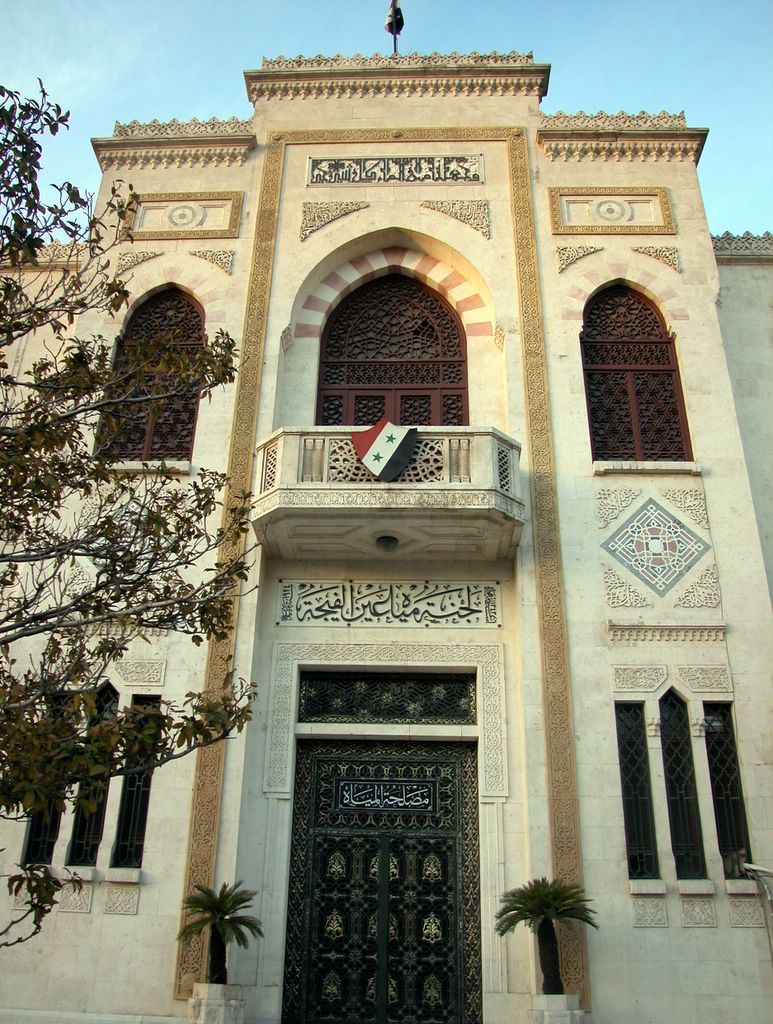
Clean drinking water from Ein al-Fijeh spring was first introduced into Damascus by Governor Hussein Nazem Pasha in 1906. The Committee of Ein Al-Fijeh Water, which was established by politician and national leader Loutfi al-Haffar , started in 1922 to lay infrastructure to deliver drinking water to all Damascus. The project was completed in 1932. The Committee's headquarters in An-Nassr Street occupy a beautiful building that was erected in 1942 and decorated by the beautiful artwork of Mohamad Ali Khayat and calligraphy of Mohamad Badawi Al-Dirani. The script on the top is a verse from the Holy Quran:

"And we made from water every living thing"

3/06/2005

Young Country


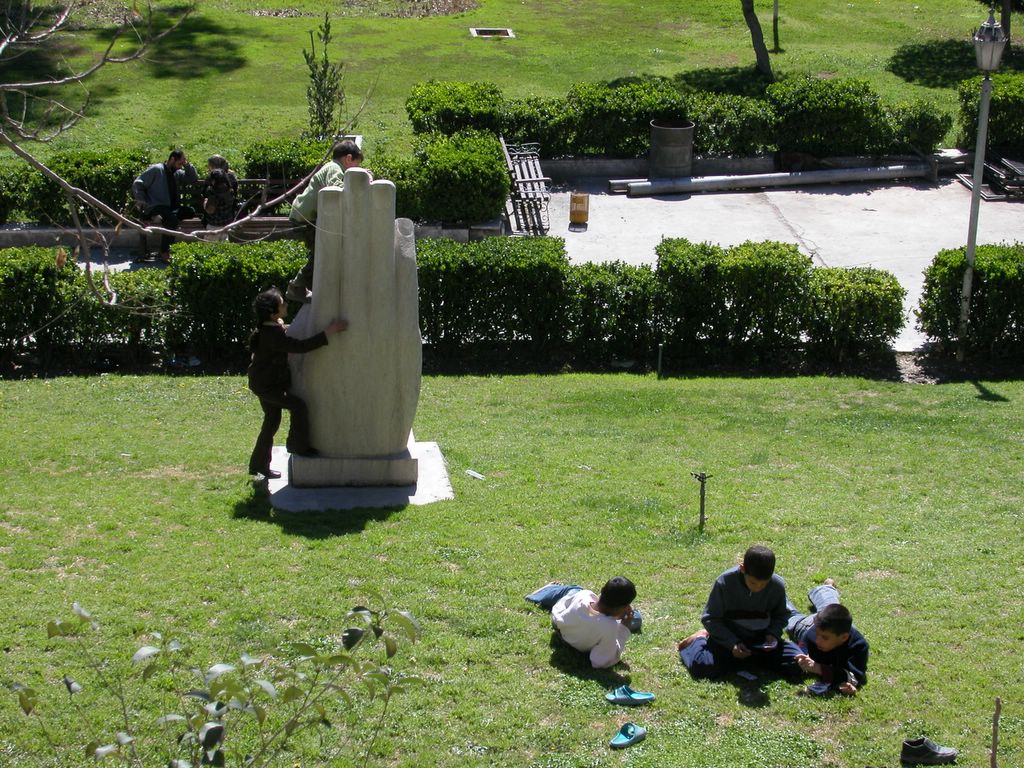
Children playing in al-Menshieh Park overlooking Shukri al-Quwatli Street. Syria has a very young population. About 46% of Syrians are under the age of 15 and nearly 60% are under 20.

3/05/2005

Pulling Out


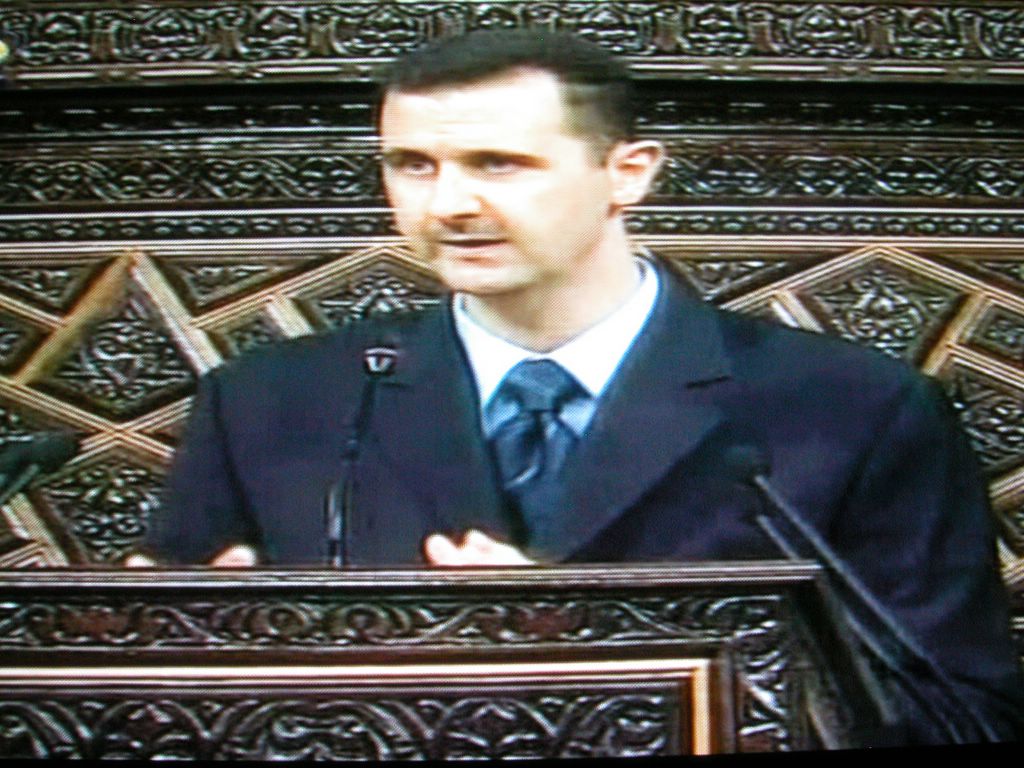
President Bashar Al-Assad addressed the Parliament today about the Lebanese crisis. Assad announced a plan to withdraw Syrian troops to Bekaa valley, as a step towards full withdrawal. When this withdrawal is completed, Assad said, Syria would have fulfilled its obligations under the Taif agreement and UN Security Council resolution 1559. Will this be enough to stop the barking of Bush and others? I don't think so.

3/04/2005

Laying Mats

Laying mats in preparation for the Friday prayers in Mohamad al-Talawi Mosque in Qanawat. Before entering a mosque, Muslims take their shoes off, out of respect to the house of God.

3/03/2005

Cleaning Action


Al-Abed Building is one of the finest examples of early 20th century architecture in Damascus. It was constructed in 1910 by the Spanish architect Fernando de Aranda (1878-1969), who is thought to be the same architect who designed the Hijaz Railway Station. For decades, the building has been victim to the dirtiness and pollution of downtown Damascus. Now it seems to be undergoing a long-waited cleaning action.

3/02/2005

Her Sons


"Those who want to get with the latest US program must put the blame on Syria. What for? Doesn't matter in the least. Whether it is for the two world wars, the demise of Elvis or sinking the Titanic, Syria makes a handy and eminently fashionable punching bag..."

-- Linda Heard in Arab News

"...This is the reality we must deal with. It's not important to approve or refuse accusations against us. We must read what's behind them; and what's behind them is now obvious: The beginning of an attack against Syria. Maybe we had a lot of differences in the past, maybe we will have lots in the future (...) But Syria will remain our great love. Syria will remain the dream that unites us (...) Let's love Syria, pray for her, defend her. Today Syria needs all her sons, needs us to be her sons, just her sons."

-- Nidal Maalouf in Syria News (translated)

2/28/2005

Aleppan Wisdom

Words of wisdom on the show window of a souvenir shop in Aleppo:
"A civilized person only spits in his handkerchief! Cleanliness is part of faith."

2/26/2005

Hotel Controversy


It was announced today that construction works of the Four Seasons Hotel have been completed and that the Hotel will officially open next summer. There has been a lot of controversy in Damascus about the Hotel, which is 65% owned by the Saudi Billionaire Al-Walid Bin Talal, 17% by the Governorate of Damascus and 17% by the Ministry of Tourism:

( - ) Many feel that the building's design does not fit the area. Towering in Shukri Al-Quwatli Street and overlooking Barada River and the historic Tekiyyeh Mosque, the huge block of glass and marble now dominates the skyline of central Damascus. Some have complained about the fact that the hotel consumed a large part of Al-Menshieh Park and surrounded the eight-century-old dome covering the tomb of Faroukh Shah, the nephew of Saladin.

( + ) This is going to be the largest hotel in Syria and the first five-star hotel to be opened in Damascus in nearly 2 decades. In addition, the new Hotel occupies an advantageous "strategic" site in the heart of Damascus. It will boost the tourist industry in the country and create an atmosphere of competition that will result in better tourist services. The building looks great, especially when lit at night; it gives a touch of modernity to the center of the nation's capital, the home to an estimated 5 million people.
2/25/2005

Damascene Breakfast


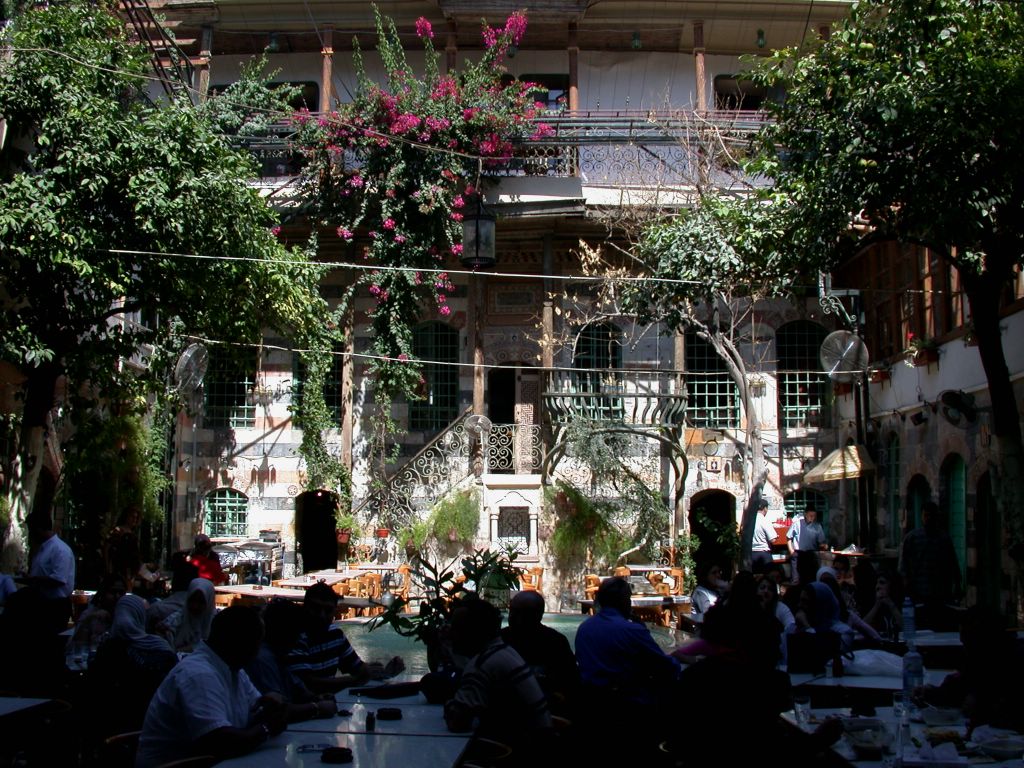
A no-longer-new trend in Damascus is opening restaurants and cafes in restored traditional Damascene houses of the Old City. As well as making good money for investors, this helped to preserve many beautiful houses that were neglected for a long time and to breathe life back into the Old City. An example is Beit Jabri, an 18th-century house with 23 rooms that was turned into a restaurant in 1996. On Friday mornings, Beit Jabri is crowded with people who gather for a traditional Damascene breakfast of fatteh or tess'iyeh: A mixture of broken pieces of toasted pita bread and chickpeas, covered with a special sauce made of yogurt and tahini (sesame seeds paste) and served in two types: with olive oil or with samneh (ghee).